How Meddy's Turned A Winter-Shut Patio Into Year-Round Seating
How Meddy's Turned A Winter-Shut Patio Into Year-Round Seating
Winter Shut Down Their Patio
We Made It Usable Again.
For a busy restaurant, empty tables cost money.
But what's worse is empty tables outside while customers wait inside.
That was the situation at Meddy's, a growing Mediterranean restaurant in Kansas City. Their patio was one of their most popular features(other than their delicious food!) until winter hit.
Once cold temperatures and wind rolled in, the patio became unusable.
Even with heaters running, guests wouldn't sit outside. The space sat empty while demand stayed high inside. Staff were forced to manage long wait times while available seating went unused.
Meddy's brought us in to solve it.
This wasn't a design issue.
It was a performance problem.
The Real Problem Was Wind
At first glance, the patio felt too cold to use.
But the heaters were already there.
The space was fully exposed. Wind moved straight through the patio and pulled heat out as fast as it was produced. The heaters never had a chance to do their job.
Even with both built-in ceiling heaters and portable propane heaters running, they still couldn't keep the patio warm enough for guests.
What We Found On Site
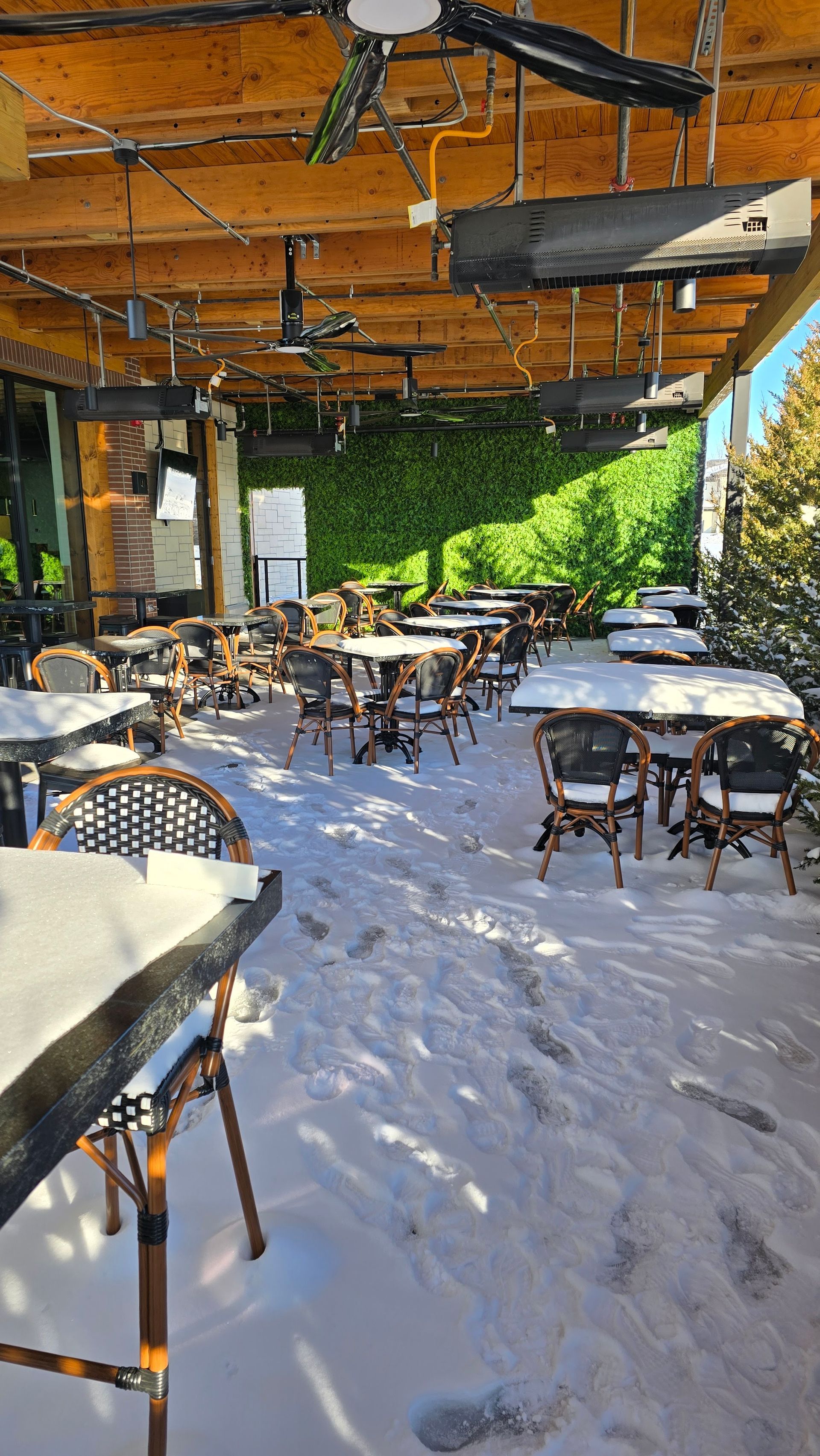
When we showed up to measure, the conditions made it obvious.
The patio was buried under snow. Icicles hung from the structure.
We were looking at a space that hadn't been usable in months.
The goal wasn't to turn it into an indoor room. It was to control the environment enough for the heaters to work and for guests to actually use the space.
Why A 95% Solar Screen Was The Right Solution
Standard bug screens wouldn't solve this.
Typical bug screens are about 50% density. They keep insects out, but they do almost nothing to hold heat or block wind, rain, snow, and ice.
We installed a 95% solar screen system designed to cut down air movement while keeping visibility and airflow.
At the push of a button, staff can now control the wind across the patio.
That changed everything.
The patio stayed open, but the environment inside it was controlled enough for the heaters to work.
We looked at full enclosure options, but those would have changed the entire feel of the space. The goal wasn't to close it in. It was to make it usable.
But there was a structural complication.
The patio had posts and handrails that would normally interfere with a standard shade drop. We engineered a butt and bypass system that routed the screens around those obstructions without changing the structure.
This is where most companies get stuck.
A salesperson takes measurements, submits the order, and hopes it works. Then the installer shows up and realizes it doesn't. Now the customer is stuck with delays, change orders, or a system that can't be installed.
We don't operate that way.
Our product specialists have 15–20 years of hands-on installation experience. They know how products are manufactured, how they mount, and where failures happen.
The planning gets done before anything is ordered.
That's why this install went smoothly.
More Examples Of Our Exterior Shades And Interior Blinds
Tim's New Patio Blocks Winter At The Push Of A Button
The Antique Window Other Companies Called “Impossible To Have Shutters”
Installation Without Disruption
For a restaurant, downtime matters.
We completed the installation in a single day… in 23-degree weather.
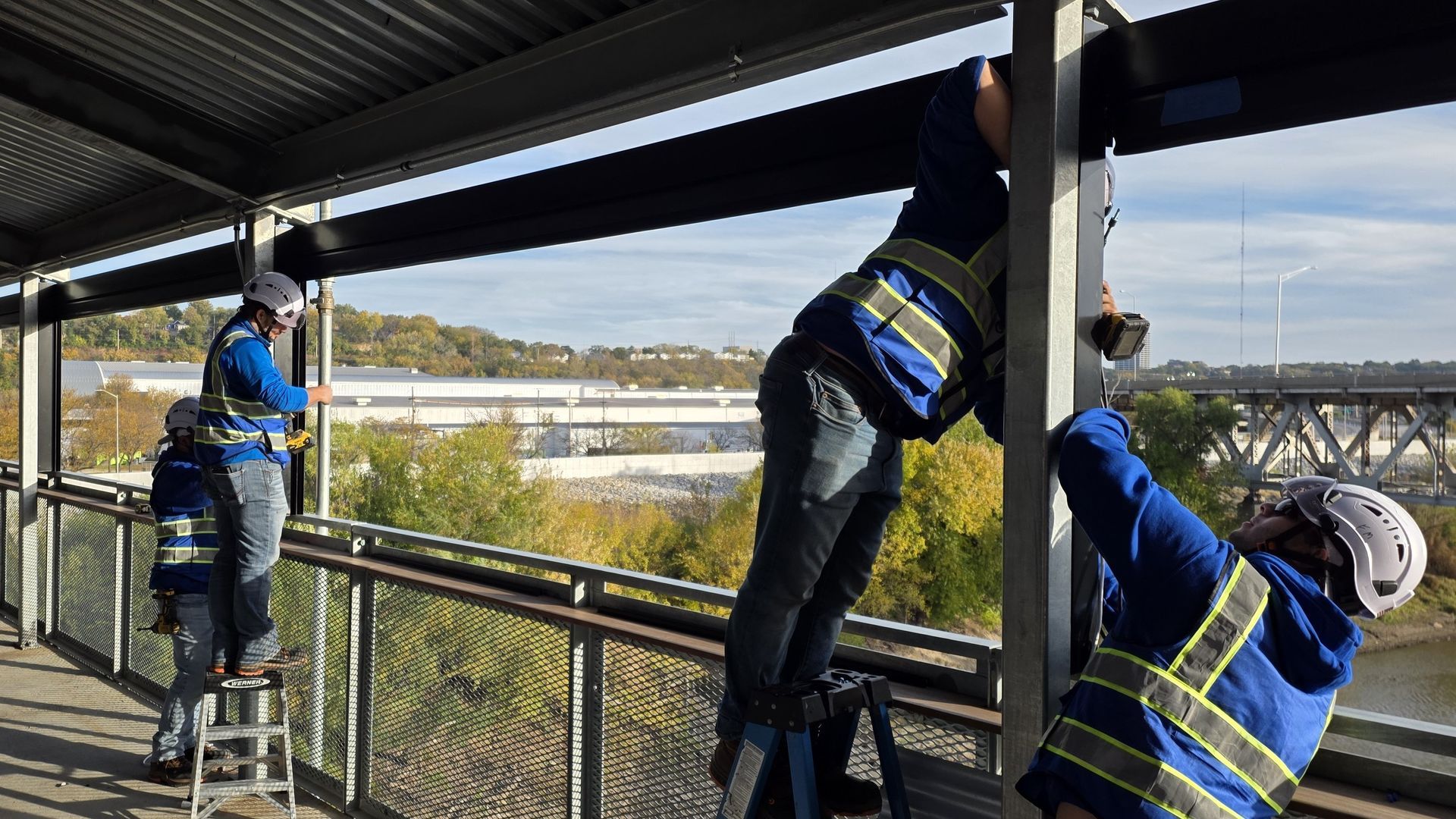
Our team removed the old system, installed the new screens, and had the patio operational before the restaurant opened for dinner service.
As the shades came down, the difference was immediate. The wind was cut off, and the heaters finally had a chance to work.
Staff and passing customers stopped to watch.
Multiple people said the same thing: "This is going to be a game-changer."
The Result: Elevated Comfort And A Patio That Works In Winter
Before this project, the patio sat empty all winter.
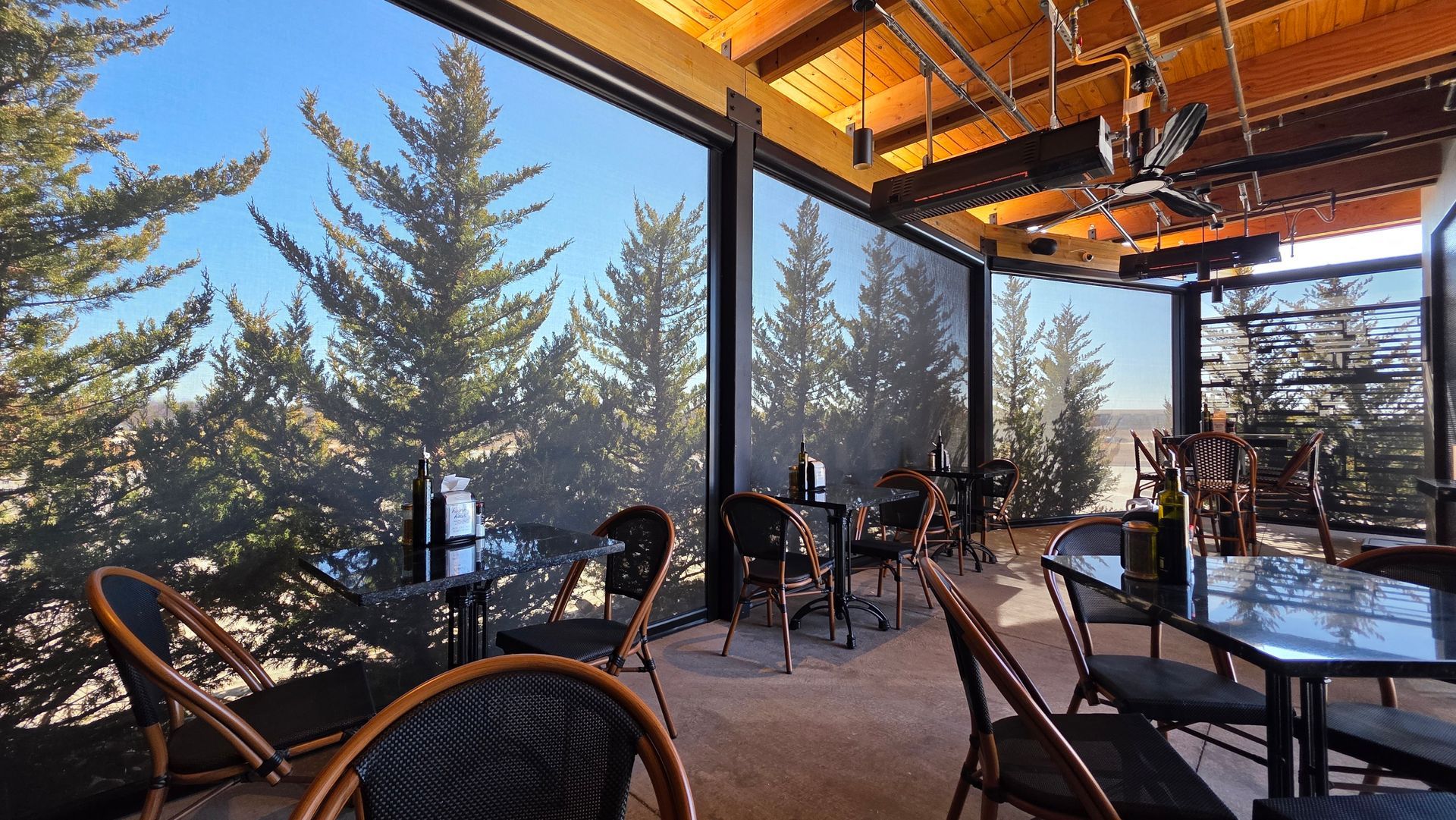
Two weeks after installation, guests were dining outside on a cold and windy day.
With the wind controlled, the space shifted from exposed and unusable to a more stable, comfortable environment – what we refer to as “elevated comfort”. Not fully enclosed, but controlled enough to make the space functional again.
The impact was immediate.
Solar Shield Blinds estimates the system effectively doubled Meddy's usable seating capacity during colder weather.
The patio went from unused space to revenue-generating seating during peak hours.
More guests served.
Shorter wait times.
Less wasted heat.
The results were strong enough that the owner immediately moved forward with the same solution at their two other metro locations.
Bottom Line
This wasn't about adding shades.
It was about fixing the condition that made the space unusable.
Control the wind, and the entire space works differently.